This is a rough draft. Please note the editing.
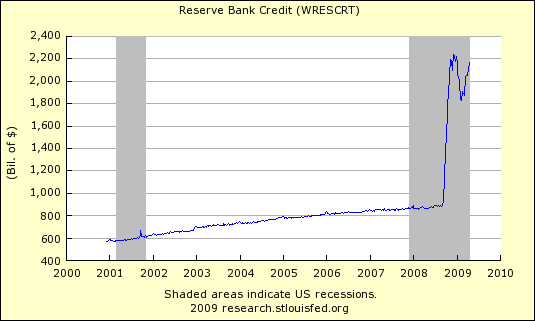
I will put in a chart to help make your point.
We need a link to the free trial---are you still offering that?
A picture of you. A very short description of your company and a the link you want to use back to your website.
I am going to put a thumbnail of your picture and your very short description of your comany, along with the url in a table so it looks kinda like a banner. Give you some ethos. Or you could send me your own banner with pic and description if you have it. if not i will sell you the one i will make for you for $36.66.
The Critical Importance of Dividends
By Steve Cook (put banner in here)
So how do like your growth stocks now?
How do feel about the guy who convinced you that all the capital gains those growth stocks were going to earn you would be there to fund your retirement (or fill in your own financial objective)?
Not so good, heh.
Many of my friends who are nearing retirement would agree.
I can’t tell you how many of my friends have said to me over the past six months
“I was going to retire next year but my 401K is down (fill in your number) percent; so I am now going to have to work for anothe (X) years.”
There is a lesson here -- over the long term, rising stock prices on average have provided a larger component of total equity return than dividend yield, you live in the short term.
(editor note: i have no idea what this sentence means)
In the short term, you can’t spend the historical average rate of capital appreciation on stocks. If you try, you will negatively impact the ‘rising stock price’ component of your portfolios total equity return. (no clue what this means)
I don’t want to get too deep into the math; but think for a minute.
- Assume you had a $1,000,000 portfolio in October of 2007 and you thought you could make everything your were going to need by making good returns.
- You owned a lot of low yield and non dividend paying stocks and your portfolio yielded 1.5%.
- Let’s assume you were either withdrawing or expected to withdraw sometime in the future--$50,000 annually ($15,000 from dividends, $35,000 from capital gains).
- Expecting your portfolio to produce a 5% annual income was not an unreasonable expectation at the time.
What does your portfolio look like now?
- It is likely that your million dollar portfolio has fallen to $500,000-$600,000.
- If you take $50,000 out of capital to spend, you now need your portfolio to produce an 8-10% annual return. ($50,000/$500,000 - $600,000).
- Are 8-10% returns reasonable or are you more likely to exhaust your retirement account long before you die?
Let's assume that in 2007,
- You had the same $1,000,000 portfolio.
- You needed or expected to need the same $50,000 annual income from your portfolio.
- You decided to structured your portfolio with dividend paying stocks and sufficient bonds so that it produced $50,000 annually.
- Where would you be in 2009?
- Your portfolio is worth less; but your income hasn’t been impacted.
- Indeed, if you owned stocks that raised their dividends every year, your income would have grown between 2007 and 2009 and would be greater than $50,000.
This explains why an investment strategy that focuses on creating a growing stream of income works better for an investorwho expects to use those funds to accomplish an objective--
like retirement. In stock land, a growing stream of income only comes from one source--companies that raise their dividends consistently.
If properly implemented and accompanied by a very strict Buy/Sell discipline, the dividend strategy can produce a growing stream of income and a competitive capital performance.
The dividend strategy, allows an investor
- To set goals and control outcomes--an annual income stream of $50,000 for example.
- Rely on a dividend streams to fund retirment; rather than relying on the direction of the market over the long term. (see the S and P 500 Chart)
- To sleep at night as the DJIA goes from 14,000 to 7,000 (because dividend income is the name of the game--not market speculation).
By focusing on income instead of capital gains, the long term or retirement investor can avoid the horrors of the market like we have seen in 2008-2009.
Surprisingly, the dividend investor benefits in bear markets like we are seeing now, because this investor is now buying stocks that are yielding twice what they did a year ago.
In other words, it is like doubling the amount invested this year versus last and accelerating the investor’s primary objective--income.
How do I execute this investment strategy? Here is the simple explanation.
We run a screen that identifies companies that
- Have never cut their dividend.
- Have raised their dividends in at least 7 out of 10 years.
- This allows us to remove companies with weak financial statements and companies that are at risk of paying the dividend--from our universe of candidate stocks.
Once we have our list of the best candidates (usually less than 200 names), we run those companies through our propriatary
Valuation Model.
At the end of the process we want to be confident that
- We don’t overpay for a stock.
- We identify those stocks that no longer fit our strick criteria.
- And that we remove exisiting portfolio stocks from our ownership list (at a gain or loss), and replace those companies with stocks that better fit our overall strategy and objectives. (we need to fix this section>
You could do all of the above for yourself. And, if you have 50-60 hours a week I encourage you to do so.
Or you can hire us to provide you with our propriatary information for less than what you would spend on a bottle of water a day. For that price you get 40 years of experience and a hard working, disciplined team that puts your interest first.
Why should you give it a test drive?
Consider this
- Our longest lived portfolio is beating the S&P 500 by 600 basis points a year.
- The beta is .62.
- The alpha 4+ .
Federal regulations require that we point out that past performance is no indication of future performance.
We need to put a hard close here with a link to the offering.
Read More....
Bob DeMarco is the editor of the Alzheimer's Reading Room and an Alzheimer's caregiver. The Alzheimer's Reading Room is the number one website on the Internet for news, advice, and insight into Alzheimer's disease. Bob has written more than 950 articles with more than 8,000 links on the Internet. Bob resides in Delray Beach, FL.
 0
comments
0
comments